DIY Wedding vs. Full-Service Planner: Cost and Trade-offs
Wedding planners cost $2,000–$8,000, but they may save more than that. Here is an honest comparison of DIY planning versus hiring professional help.
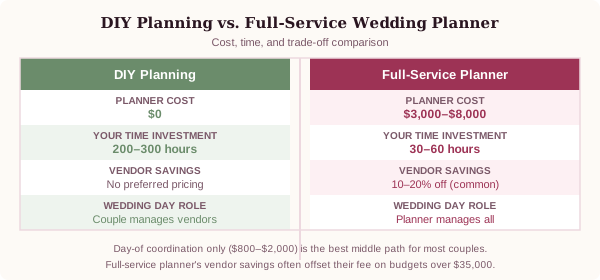
> **Quick Answer:** A full-service wedding planner costs $3,000–$8,000 in most US markets. They typically save couples 10–15% on vendor costs through preferred pricing relationships and prevent expensive mistakes. Day-of coordination only costs $800–$2,000 and is worth it for almost any couple.
The Real Question Is Not Cost — It Is Time and Risk
Most DIY wedding planning discussions focus on cost. The more useful framework is: how much is 200–300 hours of your time and the risk of coordination failures worth to you?
Planning a wedding from scratch without professional help takes a minimum of 200 hours over 12–18 months. For many couples, that time investment is manageable and enjoyable. For others — especially those with demanding careers, young children, or significant geographic distance from the wedding location — it is genuinely not.
[Estimate your full wedding budget](/wedding-cost-estimator) to establish your baseline before deciding where to allocate the planner's fee.
What a Full-Service Wedding Planner Actually Does
A full-service wedding planner earns their fee across three areas:
**1. Vendor sourcing and negotiation**
Established planners have active relationships with venues, photographers, caterers, and florists. These relationships often mean preferred pricing — 10–20% discounts that apply to their clients. On a $40,000 wedding, 10% vendor savings is $4,000, which exceeds the planner's fee. This is not guaranteed, but it is common enough to be a real consideration.
More importantly, planners know which vendors reliably deliver and which ones require close management. That knowledge prevents the expensive lesson of hiring a caterer who cancels two months out or a DJ who shows up unprepared.
**2. Logistics coordination**
A wedding day with 10 vendors, 150 guests, and a 6-hour reception timeline has hundreds of moving parts. The ceremony runs 20 minutes long. The florist arrives 45 minutes late. The bridal party needs to be reorganized because one person got lost. Each of these scenarios requires immediate decisions.
Full-service planners build wedding-day timelines with built-in buffers for these predictable unpredictables. They direct vendors so you do not. They handle the caterer's question about when to serve dinner. They coordinate between the ceremony venue and reception venue when the transportation company is running behind.
**3. Design and aesthetic direction**
Beyond logistics, full-service planners help you articulate what you actually want and then source it efficiently. This prevents the expensive pattern of buying décor items that do not work together, or discovering that your "vision" and your vendor's interpretation of your vision are substantially different.
Full-Service Planner Costs by Market
**National average:** $3,000–$5,000 for full-service planning
**Northeast and West Coast:** $5,000–$10,000+
**Midwest and South:** $2,000–$4,500
Planners charge either a flat fee, a percentage of total wedding budget (typically 10–15%), or an hourly rate. Percentage pricing aligns the planner's incentives with your budget — they benefit when you spend more. Flat-fee pricing is easier to budget; hourly pricing rewards efficiency on both sides.
Day-of Coordination: The Middle Path
Day-of coordination (also called "month-of" coordination) covers the final 4–6 weeks before the wedding and the wedding day itself. The coordinator reviews all your vendor contracts, builds the detailed day-of timeline, runs the rehearsal, and manages vendor coordination on the wedding day. They handle everything operationally so you and your family are not directing traffic.
**Cost:** $800–$2,000 in most markets
Day-of coordination is the clearest value proposition in wedding planning. You do 95% of the work yourself. They handle the 5% that causes the most acute stress and where mistakes are most costly. For couples who want to be present in their own wedding day rather than managing it, this is the minimum investment worth making.
The counterargument: if you have a family member or close friend who is exceptionally organized and has agreed to handle this role, you can skip it. But this genuinely requires someone without important family duties on the day (meaning not a parent, sibling, or member of the wedding party), who is willing to spend the entire day in a coordination role rather than celebrating.
When DIY Planning Makes Sense
DIY wedding planning works best when:
- You or your partner has strong project management experience
- You have flexibility in your schedule to handle vendor calls, site visits, and coordination during business hours
- Your wedding is 100 guests or fewer (complexity scales significantly with guest count)
- Your venue provides an on-site event coordinator (most hotels do; most barns and outdoor venues do not)
- You genuinely enjoy the planning process and are not doing it out of budget necessity
One underestimated challenge of DIY planning: many vendors are only available for calls and site visits during business hours on weekdays. Couples who work traditional hours often find themselves coordinating weddings during lunch breaks and taking personal days for vendor meetings.
When to Hire at Least Partial Help
**Always hire day-of coordination if:**
- Your venue does not provide an on-site coordinator
- You have more than 100 guests
- You have vendors working across multiple locations (ceremony site and reception site are different locations)
- Any family member who might otherwise coordinate has an important role in the ceremony or reception
**Consider a partial planner (design-only or month-of) if:**
- Your work schedule limits your availability for daytime vendor meetings
- You feel confident about vendor selection but uncertain about design cohesion
- You are planning a destination wedding from a different location
**Consider full-service planning if:**
- Your combined hourly value exceeds $30–$40/hour (the math on 200+ planning hours changes quickly)
- You are planning a wedding in a city where you do not currently live
- You have a complex event with multiple components (welcome dinner, day-after brunch, multiple ceremony locations)
The DIY Mistakes That Cost the Most
**Over-ordering décor.** Couples frequently order significantly more decorative items than they need. Without a designer's eye for space and scale, table décor especially tends toward over-accumulation. Unused décor is money that photographs as clutter.
**Not reading vendor contracts carefully.** Cancellation clauses, payment schedules, overtime fees, and exclusion clauses appear in contracts but frequently go unread. Missing a payment deadline or misunderstanding an overtime fee costs real money.
**Underestimating vendor coordination time.** Managing 10 vendors who each need confirmations, answers to questions, and day-of coordination is a substantial ongoing time commitment in the final month. Budget your own time realistically.
**Skipping the timeline.** The most common day-of crisis in DIY weddings is the absence of a detailed, vendor-facing timeline. Every vendor needs to know what is happening when, who to coordinate with, and what the contingency plan is if something runs long. This document alone, even for a DIY couple, is worth hiring a day-of coordinator to build.
[Run your wedding cost estimate](/wedding-cost-estimator) with and without a planner's fee to see how it affects your overall budget. For guidance on building your full wedding budget, see our [step-by-step wedding budget guide](/blog/how-to-build-wedding-budget).